

Case Clicker
Burger Clicker
Click To Continue 2

Clicker Heroes

Doggo Clicker

Coin Clicker

Muscle Clicker











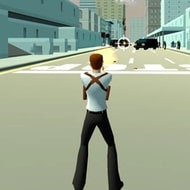







Here’s the one fact worth opening on: Indian-bike arcade driving games live or die on how convincingly a motorcycle handles when you gun it through traffic that isn’t paying attention to you. That’s the premise Indian Bike Driving 3D borrows its name from, and it’s a fair starting point for talking about what this style of game asks from a player, even without pretending to know every detail of this particular build.
Games built around this idea usually strip driving down to a handful of inputs: throttle, brake, lean, and not much else. The appeal is supposed to come from how the bike responds under you, not from a deep menu of systems, so the entire experience lives or dies on whether the handling feels weighty enough to respect and light enough to enjoy.
Traffic weaving: the genre’s central skill is reading a lane of oncoming or cross traffic and finding the gap before it closes, usually while still carrying enough speed that braking hard isn’t really an option.
Balance under braking: a motorcycle that pitches forward too aggressively under braking is a common frustration players bring up about this kind of game, since it turns a routine stop into an unwanted low-side spill.
None of that is a guarantee about what any specific build actually delivers. Builds in this space vary wildly in polish, and some genuinely don’t render or run in a way that lets a player evaluate the handling at all, which is worth knowing going in rather than discovering after the fact.
The wheelie is close to a signature move for this entire genre of game, less because it’s strategically useful and more because pulling one off cleanly through busy traffic is the kind of moment players screenshot and share. It’s a stunt built on top of the core driving loop rather than a separate system, which is part of why it tends to define how people remember these games even when the rest of the mechanics are fairly plain.
Balance is the harder skill underneath the flashy part. Holding a wheelie for more than a couple of seconds usually means constant small corrections rather than one input and a wait, and overcorrecting is the most common way a stunt run ends early.
Newer players tend to chase the stunt before they’ve built a feel for basic throttle and lean control, and that ordering is usually backwards. Getting comfortable with ordinary traffic weaving first tends to make the stunt side of the genre click much faster once you actually try it.
Indian Bike Driving 3D sits in a genre defined by two-wheeled traffic chaos and the occasional reckless stunt, and whether any single build lives up to that premise is really a question of how much polish went into the handling underneath it.
