

Case Clicker
Burger Clicker
Click To Continue 2

Clicker Heroes

Doggo Clicker

Coin Clicker

Muscle Clicker


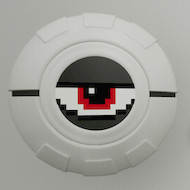










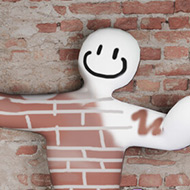



You crouch behind a stack of crates, drag your fingertip across the paint palette, and coat your arm a dusty terracotta to match the wall behind you. Footsteps grow louder around the corner. You hold the pose, tilt your head down, and wait. This is Meccha Chameleon in ten seconds: a plain white figure trying to vanish into a stage using nothing but color, angle, and stillness.
| Genre | Party, hide-and-seek |
| Roles | Hider, Seeker |
| Recommended lobby size | 2 to 10 players |
| Core tool | Camouflage paint and pose |
Every Hider starts as a bare white figure, which is the point — there’s nothing to work with until you commit to a color. On a stage like the Osaka map, brick, vending machines, and rusted signage all read differently under the lighting, so the same red that blends against one wall can glow like a warning light two steps to the left. Players quickly learn that matching a surface’s hue is only half the job; texture and shadow matter just as much, since a flat coat of paint on a patterned wall still leaves an obvious silhouette.
Newer Hiders tend to paint fast and pick a spot second, when the smarter order is the reverse. Scout the corner first, note what’s actually nearby — a dumpster, a stairwell, a cluster of pipes — and only then commit paint to skin.
The most common beginner mistake isn’t a bad paint job, it’s overconfidence in a good one. A convincing color scheme means nothing if you’re standing in the middle of an open hallway with no real reason to be there. Seekers aren’t just scanning for odd colors, they’re scanning for anything that doesn’t belong in the scene’s logic, and a perfectly painted figure standing where no object should be will get shot on sight.
Competitive Seekers, in particular, learn to distrust flat surfaces and empty corners specifically because that’s where lazy Hiders cluster. A more patient Hider will instead build height or depth into their disguise, clinging to a wall or folding into a shelf gap rather than standing flush against open ground.
The paint gun the Seeker carries only needs one solid hit to end a round for a Hider, which raises the stakes of every second spent second-guessing a hiding spot. That single detail is why so many rounds come down to a Seeker’s hesitation rather than a Hider’s disguise.
Standard rounds are already tense, but Meccha Chameleon layers in modes that shift the entire dynamic once players have the basics down. Reverse Chicken Race flips the usual pressure: instead of Hiders quietly waiting out the clock, the format pushes players toward bolder, riskier positioning where staying still too long becomes its own liability. It rewards a completely different kind of player than the cautious wall-hugger from a standard round.
Streamers have gravitated toward these variant modes because they read well to an audience — a viewer watching a static hider for two minutes is a harder watch than one seeing someone gamble on a bad hiding spot in real time. Casual groups tend to stick with standard rounds, while people chasing something screenshot-worthy for a stream push toward the escalating modes instead.
No community discussion of the game goes long without someone bringing up cheating, and it’s a fair complaint. Reports of aim-locking exploits that snap a Seeker’s paint gun onto a hidden Hider without any real search have circulated since launch, and they’re frustrating precisely because the entire appeal of the format rests on human observation rather than mechanical precision. Alongside that sits a smaller but persistent gripe about painting controls feeling imprecise at finer detail levels, something players chalk up to the small development team behind such a fast-built release.
None of that has slowed the game down — it’s sold more than fifteen million copies since launch, which says a lot about how quickly a simple hide-and-seek idea can turn into a shared obsession.
Lobbies typically run best with 2 to 10 players, though the practical cap depends on the host’s own connection quality. Public rooms tend to fill toward the higher end, while private matches with friends often stay smaller and more relaxed.
Color match is only the starting point — pose, texture, and plausible placement matter just as much. A figure painted perfectly but standing somewhere no object belongs will still get caught by an attentive Seeker.
Variant modes like Reverse Chicken Race change the core incentive structure, pushing Hiders toward riskier movement instead of pure stillness, which shifts the entire pace of a match compared to a standard round.
Meccha Chameleon works because it turns a childhood game into something that rewards actual observation, and the Osaka map is a good reminder of how much a single texture choice can change a round. Whether you’re the one painting yourself into a wall or the one hunting for a shape that doesn’t quite fit, the game keeps finding new ways to make a simple color choice feel like a life-or-death decision.
