

Case Clicker
Burger Clicker
Click To Continue 2

Clicker Heroes

Doggo Clicker

Coin Clicker

Muscle Clicker










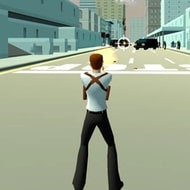





Thirty missions stand between you and the man running this city, and the very first one on that list asks you to take down 100 mafia men before anything else unlocks. That’s Mob City in a single sentence — a mission ladder that starts brutal and doesn’t really ease up from there.
| Genre | Third-person action shooter |
| Platform | Browser, HTML5/WebGL |
| Missions | 30, ending with a final boss encounter |
| Core Mechanic | Wave-style urban combat with vehicles and upgrades |
Every one of the thirty missions in Mob City builds on the last, unlocking only after you clear the current objective. The opening mission — defeating a full hundred mafia men — sets the tone early: this isn’t a game where you casually stroll through a level. It’s constant engagement, and players who try to tiptoe through get overwhelmed by sheer enemy numbers rather than any single tough opponent.
What keeps the ladder from feeling repetitive is variety in objectives further along. Some missions ask you to clear a district outright, others focus on specific targets, and the difficulty curve tracks closely with how well you’ve upgraded your loadout in the shop between attempts. Skipping shop visits to rush the next mission is a common early mistake that catches up with players around mission ten or so.
By the time the big boss mission arrives at the end of the ladder, the game expects you to have built a genuinely upgraded arsenal rather than relying on the starting pistol you began with.
Hammer Time is the signature ability in Mob City — a slowdown effect that gives you a combat edge when things get chaotic. New players tend to trigger it the moment a single tough enemy shows up, which wastes its value. Regulars save it specifically for groups, since the slow-motion window is far more useful for clearing several enemies at once than finishing off one target you could’ve handled normally.
Timing matters more than frequency here. A well-placed Hammer Time activation right as a wave of mafia men rounds a corner can turn what would’ve been a health-draining exchange into a clean sweep. Burning it reactively, after you’re already surrounded, tends to produce worse results than using it proactively.
The in-game shop stocks everything from pistols and shotguns up through assault rifles, grenade launchers, and the bazooka, and cash earned from missions and enemy drops funds every purchase. Buying reactively — waiting until a mission proves too hard with your current loadout — puts you a step behind. Experienced players tend to buy one tier above what the current mission demands, using earlier, easier missions to stockpile cash specifically for that purpose.
Switching weapons mid-fight using the cycle controls is something newer players underuse, often sticking with whatever’s equipped instead of adapting to the enemy in front of them.
Cars, and eventually a tank and helicopter, aren’t just transportation in Mob City — they’re tools. Dragging a crowd of enemies near a parked car and detonating it is a legitimate crowd-control tactic the community leans on constantly, especially in missions where mafia men spawn faster than you can pick them off individually.
Vehicles also serve as an escape option when a mission’s heat becomes unmanageable. Hopping into a car to reposition, rather than standing your ground and absorbing damage, is often the difference between finishing a mission and restarting it. Later missions that unlock the helicopter open up entirely different approaches to objectives that were previously ground-locked.
Defeated mafia men reliably drop cash, and painkillers appear often enough that health management rarely feels like a resource crunch if you’re actively collecting rather than rushing past drops. Crates scattered through mission maps hide additional loot, and shooting them — rather than walking past — is worth the extra second it costs.
Red barrels deserve special mention here: shooting one near a cluster of enemies deals significant area damage, functioning almost like a free grenade if you spot one at the right moment. Missing these environmental tools is one of the more common ways players burn through their own ammo and health unnecessarily.
Among the shop’s power-ups, Godmode — temporary invincibility — is the one that splits the Mob City community most clearly. Some players treat it as a legitimate tool for pushing through a mission that’s proven repeatedly frustrating, while others consider it close to cheating and avoid it entirely to keep runs feeling earned. Neither side is really wrong; it comes down to whether you’re optimizing for completion or for the challenge itself.
There are thirty missions total, each unlocking after the previous one is cleared, with the final mission pitting you directly against the big boss controlling the city’s criminal operations.
Lean on vehicles and red barrels for area damage rather than trying to out-shoot every individual mafia man. Dragging groups near a parked car before detonating it is one of the most efficient crowd-clearing tactics available.
Opinion is genuinely split. Some players see it as a fair tool funded by earned cash, while others avoid it to preserve the challenge, so there’s no universal consensus on whether it belongs in a legitimate playthrough.
Mob City rewards the players willing to treat the shop as seriously as the shootouts themselves — stacking cash early, saving Hammer Time for the moments it actually matters, and using every red barrel and parked car as a weapon rather than scenery. By the time that final confrontation with the big boss arrives, the difference between a clean win and a frustrating restart usually comes down to decisions made twenty missions earlier.
