


Case Clicker
Burger Clicker

Click To Continue 2

Clicker Heroes

Doggo Clicker

Coin Clicker

Muscle Clicker


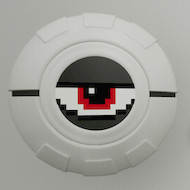








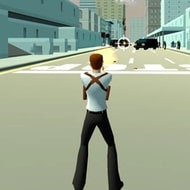







In Nextbot Graveyard you start with nothing but a bare facility corridor, a mouse cursor locked to your view, and a clock already counting down from 100 seconds, which matters more than any weapon you might expect to find. There is no gun and no inventory screen — only your footspeed, a hiding key, and however many turns you can take before the pursuing Nextbot locks onto your position. Outlasting one round in the game only buys entry into a harder one.
| Genre | Survival horror chase, first-person |
| Platform | Browser, playable on computer, tablet, and mobile |
| Controls | WASD to move, mouse to look, F to hide, T to emerge, Esc to pause |
| Objective | Survive each timed stage and reach the exit before the Nextbot closes the distance |
Every stage runs on the same rule: survive a fixed window, currently 100 seconds, while the Nextbot closes distance through the facility’s corridors. There’s no map overlay, so early stages are spent learning which hallways loop back and which dead-end into a room with no second exit. A dead end with the Nextbot already in the hallway is usually a restart.
Newer players consistently make the same mistake early in Nextbot Graveyard: sprinting the instant they hear movement instead of checking whether it’s actually closing in. Burning that positioning too early is a habit speedrun-focused players learn to drop within their first few resets.
Longtime chase-game regulars also know the enemy’s name isn’t arbitrary — Nextbot comes from the NextBot AI navigation system built into Source engine, later repurposed by Garry’s Mod modders into the faceless-pursuer chase genre this game’s structure clearly borrows from. That’s why there’s no melee option here; evasion was always the point.
Pressing F near a usable hiding point pulls you out of the Nextbot’s direct line of sight, and pressing T brings you back out once you judge it’s safe. It’s the closest thing the game has to a defensive tool, and it only works if you commit before the Nextbot is close enough to see you duck.
Players asking how to actually lose a Nextbot already on their trail usually land on the same answer: break sightline first, then hide, rather than hiding in the open and hoping distance saves you.
Veteran players lean on audio over sightlines once they’ve logged a few runs, since the Nextbot’s approach sound is often the only warning before it rounds a corner.
The game is built around six stages, each keeping the same 100-second structure while quietly tightening what surrounds it. Corridors narrow, sightlines shorten, and the Nextbot’s approach feels less forgiving with every stage cleared.
By the time you reach the later stages, the layout itself becomes the real obstacle. Casual players often describe hitting a wall around that point, where a single misread corner ends stage five or six before it really begins.
Players chasing a clean six-stage clear read those same late stages differently, treating them as the point where route memorization starts to matter more than raw reflexes.
One detail catches almost everyone off guard the first time: there’s no health bar and no second chance on contact. If the Nextbot reaches you, the run ends immediately, with no cooldown on its attack and no partial damage state to recover from.
That harshness is intentional, consistent with the wider chase genre this design pulls from, where the entire tension comes from a single mistake always being fatal. Some players find that satisfying; others find the lack of any buffer frustrating, especially on a stretch where the Nextbot’s pathing seems to correct toward your position a little too precisely.
It’s usually the first thing new players ask before their first attempt: what actually happens if the Nextbot touches you. The answer is immediate failure, with the stage timer resetting to zero on the next try.
Nextbot Graveyard keeps its systems narrow on purpose, and that narrowness is what makes the six-stage climb toward the final corridor still feel tense on a tenth attempt, long after the F-and-T hiding loop has become second nature.
