
Case Clicker
Burger Clicker
Click To Continue 2
Clicker Heroes

Doggo Clicker

Coin Clicker

Muscle Clicker
















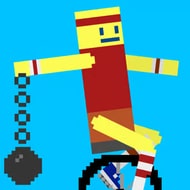
You lean back a half-second too late, the wheel shudders under your rider’s weight, and the object you just launched lands short of the marker you were chasing. That tiny correction — the one you almost made in time — is basically the whole language of Unicycle Hero. It’s a game that looks like a joke about circus performers and plays like a demanding lesson in timing and weight distribution.
| Genre | Physics-based balance and sports game |
| Platform | Browser, desktop and mobile |
| Events | Nine Olympic-style challenges |
| Core Mechanic | Balancing on one wheel while throwing objects |
Most players open Unicycle Hero expecting a throwing game and quickly realize the wheel is the actual boss. Your rider’s center of mass shifts constantly, and holding down the acceleration button just triggers the flailing animation everyone in the community jokes about. The better approach is tapping in short pulses that match the wheel’s rotation, which keeps momentum steady without tipping you sideways into the sand.
This becomes obvious the moment you hit the Log Toss event. You’re not just aiming — you’re trying to stay upright long enough to release the throw at the right angle. Casual players often try to muscle through with big corrective leans, and that’s exactly what sends the unicycle into a wobble it can’t recover from. Small, controlled taps beat large swings almost every time in this game.
Competitive players who grind Career Mode tend to describe it differently: they’re not thinking about the throw at all until the balance becomes automatic. Once that happens, attention shifts entirely to distance and accuracy, which is where the real scoring gains show up.
Each of the nine events in Unicycle Hero rewards a slightly different rhythm. The 100m Dash cares about raw acceleration pulses and staying low through the wobble zones, while the Log Toss and similar throwing events reward a slower build-up followed by a sharp release timed to the wheel’s forward lean. Mixing up those rhythms is one of the most common mistakes newer players make — they use dash timing in a throwing event and end up flat on the track.
Long-distance chasers, meanwhile, obsess over one specific detail: tapping reverse briefly right before release resets the pivot point just enough to add a few extra meters. It’s a small window, maybe half a second, but regulars in the community treat it as essential once you’re past your first few playthroughs.
Once you clear the early events, the game stops being forgiving about sloppy pulses.
Coins earned across events go toward enhancements — upgrades to throwing power, accuracy, and cycling speed that noticeably change how forgiving each event feels. Early on, most players dump everything into accuracy because missed throws are the most obvious source of lost points. By the time you’re deeper into Career Mode, though, cycling speed upgrades matter more, since they buy extra fractions of a second to correct your lean before a fall becomes unrecoverable.
Career Mode itself is where global comparison happens — players line up their best distances against competitors worldwide, and event-specific leaderboards create a second layer of competition beyond just finishing a run. Speedrunners chase clean event completions, while completionists tend to grind every enhancement tier before touching harder events at all.
Coins also unlock cosmetic outfits, which don’t affect performance but do show up constantly in community screenshots and clips.
None of these mistakes are punishing on their own, but they stack quickly, and Unicycle Hero has a way of making every small error visible immediately through the ragdoll physics.
This usually means you’re holding the acceleration input instead of tapping it in short pulses. The flailing animation triggers when the game detects sustained pressure rather than rhythmic taps, so switching to a pulse pattern synced with the wheel’s rotation resolves it almost immediately.
The Log Toss is the most forgiving place to learn it, since the throw window is longer than in faster events. Tapping reverse briefly right before releasing resets your pivot point and adds noticeable distance once the timing clicks.
Enhancements genuinely change event difficulty. Accuracy upgrades help early, but cycling speed becomes more valuable in later events where the margin for correcting a lean shrinks considerably.
Unicycle Hero rewards the kind of player who stops fighting the wheel and starts listening to it — the ones willing to relearn the Log Toss ten times just to shave a few meters off their pulse timing. It’s a goofy premise wrapped around a genuinely demanding balance system, and once that pulse rhythm clicks, the whole game opens up differently than it did on your first wobbly run.
