

Case Clicker
Burger Clicker

Click To Continue 2

Clicker Heroes
Doggo Clicker

Coin Clicker

Muscle Clicker





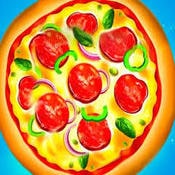











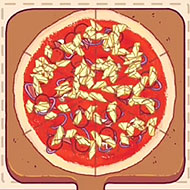
Good Pizza, Great Pizza gives you a counter, a camera, a menu of toppings, and an oven. A customer walks in. They describe what they want. You make it. That sentence describes the entire game, and also obscures the entire game. By the time Eleanor Greenfield has handed you a potted eggplant plant to water daily, Rufus Goldworthy has come to the counter hungry and broke for the second time, and Alicante is standing across the street visibly frustrated that your pepperoni numbers are better than his — you understand that Good Pizza, Great Pizza is a restaurant management game with a story threaded through it, not just a cooking puzzle.
| Genre | Restaurant simulation / story-driven |
| Platform | Mobile (iOS, Android) |
| Chapters | 5 main chapters, each with a distinct antagonist |
| Currency | Pizza Funds (ingredients and upgrades) |
| Core daily loop | Serve customers → earn Pizza Funds → unlock toppings and equipment |
Good Pizza, Great Pizza builds each order around a sequence: place dough, spread tomato sauce, add toppings, bake, slice, and box. The default rule — the one new players most commonly miss and violate — is that every pizza receives sauce and cheese unless the customer specifically says otherwise. A customer who asks for a mushroom pizza wants sauce, cheese, and mushrooms. A customer who asks for a cheese-only flatbread wants cheese and no sauce. Reading the distinction between these two takes practice, and the first dozen days in Chapter 1 are essentially a course in listening to customer phrasing.
The topping count has a specific rule: eighteen pieces of each required topping, distributed evenly across the surface. Adding them in a spiral pattern from the center outward is the method the tutorial recommends, and it produces consistent even coverage that tips reflect. For half-and-half pizzas — which appear as early as National Half Day on Day 4 — toppings apply to one side only, and getting the boundary clean affects both accuracy and tip amount. Early on, the cut is also judged: an uneven slice distribution reduces the tip, which means the pizza-cutting mini-step is not decorative.
Well done is achieved by running the pizza through the oven twice. Super extra crispy, which appears in some unusual orders later in the game, requires three oven passes. Wheat Dough, which unlocks in Chapter 2 alongside Pesto Sauce, opens a second branch of base options — and orders specifying Pesto Sauce base rather than Tomato Sauce require reading the dialogue carefully, because the default sauce assumption only applies when no sauce is named.
Alicante is the first named character in Good Pizza, Great Pizza, and he arrives as a tutorial helper before immediately becoming the Chapter 1 antagonist running the rival pizzeria across the street. The game’s community has frequently noted that Alicante is structured almost like Wario to your Mario — large, mustachioed, Italian-rooted, and deeply competitive in a way that eventually softens into something like grudging friendship. By Chapter 4 he is actively helping you against Big Data Pizza and teaching you how to make your own House Special, which is the kind of character trajectory that rewards players who stayed through Chapter 1’s friction with him.
Eleanor Greenfield is the character who gives you the potted eggplant on Day 4 of Chapter 1 in exchange for a pizza on the house. Watering the eggplant every day for four days unlocks it as a free topping — a resource-saving mechanic that rewards daily engagement. Missing the watering window resets the counter. The eggplant’s gauge depletes over time even after it is unlocked, requiring ongoing harvesting, which makes it the game’s first ongoing resource management task outside the kitchen itself.
Rufus Goldworthy arrives on Day 6 of Chapter 1 as a homeless man with no money. The community consensus is clear and consistent: help him every time he comes in. Players who feed Rufus when he appears — and continue to do so with Buddy, the other regular without funds — receive 100 Pizza Funds at the end of Chapter 1 from Rufus alone. Beyond the reward, these are also the interactions that establish Good Pizza, Great Pizza’s tone: the player character is not just a merchant optimizing tip extraction, they are an ovenist who is part of a neighborhood.
The most common early mistake in Good Pizza, Great Pizza is misreading unusual phrasing. The game’s customers frequently describe their orders indirectly, and some descriptions have specific correct interpretations that are not obvious on first read. A customer asking for a pizza that looks like the sunrise wants standard sauce and cheese — no additional toppings. A customer asking for a half cheese bread and half sauce bread wants cheese-only on one half and sauce-only on the other, meaning no combined sauce-and-cheese base. The MyPad, which players receive on Day 1, tracks achievements and quests and can be consulted to clarify order history.
Declining an order is sometimes the correct decision. When a customer requests a topping that has not yet been unlocked, serving a pizza without it counts as an error and loses money. Tapping the decline option costs goodwill but does not cost Pizza Funds on an ingredient the shop does not carry. New players who attempt to fulfill every order without checking their current ingredient list end up losing more to unfulfillable requests than they would have from a polite decline.
The Autobuddy upgrade system — which applies a single tap to distribute an ingredient evenly across one half of a pizza — becomes essential once order complexity increases past Chapter 1. Half-and-half orders with multiple toppings per side take significantly longer without Autobuddies, and the tip reduction from slow preparation compounds with high customer volume. Players who invest Pizza Funds in Autobuddies for their most-requested toppings early find that the investment pays back quickly through improved tips on complex orders.
Each chapter in Good Pizza, Great Pizza runs on an in-game day count, with four to six topping festivals scheduled throughout. During a festival, customers are significantly more likely to order pizzas featuring that festival’s highlighted topping. Sausage Festival in Chapter 1 appears on Day 9, for example, and it is both a signal to buy sausage if you have not and a preview of how the game uses story beats and economic pressure together — you need the ingredient anyway for story progression, and the festival creates organic demand for it at the same time.
Chapter chapters escalate the antagonist structure. Chapter 3 pits you against Dr. Michael Keh in the PizzaCon Pizza Palooza competition. Chapter 4 introduces Angelica Béchamel and Big Data Pizza, a monopoly storyline complete with a WPA agent named Nasir Amin providing intelligence. Chapter 5 features the ZArena competition run by Octavia Bell, with returning characters Alicante and Dr. Keh alongside newcomer Cicero Burrata — and a story that eventually involves a stolen ancient dough, a curse from Julius Cheeser, and a pizza-based mystery that the TV Tropes page describes with genuine affection as committing fully to its own absurd premise.
The story’s escalation is something the community either loves or finds distracting depending on what they wanted from the game. Players who came for the pizza mechanics and found a lore-rich multi-chapter narrative about pizza councils and ancient doughs are consistently divided on whether the story adds depth or noise. Players who stayed for the characters tend to cite Alicante’s arc specifically as evidence that the story earned its ambition.
Pizza Funds are spent on two things in Good Pizza, Great Pizza: ingredients and equipment. Ingredients must be purchased before they can appear in orders, which means each new topping is both a story unlock and a practical investment question. Sausage at 20 Pizza Funds in Chapter 1 pays back quickly through Sausage Festival orders. More expensive toppings in later chapters require accumulating a reserve, which is why the player community consistently recommends not spending the last of your funds on marginal equipment upgrades while a festival ingredient is approaching.
Equipment upgrades — including the oven speed improvements and the auto-sauce that applies sauce with one tap — are long-term quality-of-life investments rather than day-one priorities. The auto-sauce dramatically reduces preparation time once the daily customer volume increases, and players who delay buying it until mid-Chapter 1 often note that the moment they installed it was the clearest before-and-after improvement they felt. The reverse: players who spent early Pizza Funds on minor equipment before unlocking all Chapter 1 ingredients sometimes find themselves short when a festival or story event requires a new ingredient purchase.
Yes, unless the customer specifically says otherwise. Sauce and cheese are the default base for every pizza in Good Pizza, Great Pizza, and omitting either counts as an order error that costs money. The exception is when a customer explicitly asks for a no-sauce or no-cheese variant — some orders specify bread-only bases or cheese-only halves. From Chapter 2 onward, Pesto Sauce becomes an alternative to Tomato Sauce, and orders that specify Pesto should use Pesto rather than the Tomato default. When in doubt, re-read the customer’s dialogue: the phrasing almost always contains the answer if you parse it carefully.
Helping Rufus Goldworthy every time he visits — and similarly helping Buddy, the other regular who comes in without money — results in Rufus returning at the end of Chapter 1 with a 100 Pizza Funds reward. Beyond the financial return, these interactions are also tied to story continuity: Rufus does not appear in Chapter 2 unless you helped him during Chapter 1. The community treats feeding the shop’s regulars-without-funds as a reliable low-cost investment, since the ingredient cost of a single pizza given away is significantly less than the end-of-chapter payout and the story access it preserves.
Run the pizza through the oven twice. The first pass produces a standard bake; the second produces well done. For super extra crispy, which appears in some unusual orders using specific phrasing, three oven passes are required. Customers who request well done will use phrasing that signals the doneness level — the order dialogue is the primary indicator. The Topping Guide upgrade, available early in the shop’s equipment menu, displays the placement rules for each topping during preparation, which is worth buying early since it removes the need to memorise the spiral placement pattern while managing oven timing simultaneously.
Good Pizza, Great Pizza holds its audience because the pizza-making mechanics and the neighborhood story reinforce each other rather than competing for attention. The moment a customer with an unusual order walks in speaking in riddles and you decipher that they want sauce and nothing else, or Alicante shows up wearing scratches and a torn apron because Chapter 1 did not go his way, or Eleanor Greenfield’s eggplant finally produces its first harvestable crop — these are the beats that make the pizzeria feel like it belongs to a place rather than to a tutorial sequence. The oven timer and Rufus’s visits run in the same world, and that is rarer than it sounds.
