


Case Clicker
Burger Clicker
Click To Continue 2

Clicker Heroes

Doggo Clicker

Coin Clicker

Muscle Clicker



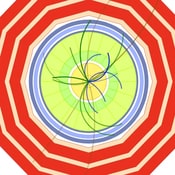








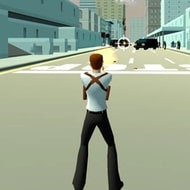



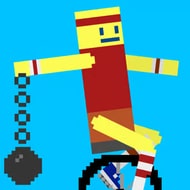





Life The Game compresses your entire existence into thirteen mini-games and a Terry Pratchett quote at the end. It does not pretend this is sufficient. The Midlife Crisis stage has you making questionable purchases. The Grandparent stage has you babysitting in spectacular fashion. The Death stage just ends, and then Pratchett’s line — “It is said that your life flashes before your eyes just before you die. That is true, it’s called Life.” — appears on screen, and you understand what the game was actually doing. The whole thing takes under five minutes if you play perfectly. Most players take longer, because most players do not play perfectly.
| Genre | Mini-game anthology / life simulator |
| Platform | Browser and mobile (iOS) |
| Developer | OHMAIGAWD (released 2016) |
| Total stages | 13, from Birth to Death |
| Flawless completion time | Under 5 minutes |
| Continues | Unlimited |
Life The Game does not use a single mechanic across its stages. Each of the thirteen represents a different life phase with a completely separate mini-game format. Birth starts with a crawl-to-walk progression challenge. Infancy, Childhood, Adolescence, Teenage Years, College, Young Adulthood, Marriage, Parenthood, Midlife Crisis, Grandparent, Senior Years, and Death each bring a different input requirement — some timing-based, some memory-based, some coordination-based. No two stages feel identical, which is the central design choice that makes the game more than the sum of its duration.
The newer stages added in 2020 — Burger Madness, Study Session, Travel Puzzles, and Rainbow Melody — each follow this same principle. Burger Madness requires correctly stacking ingredients in a specific order against a timer. Study Session has you tapping away distractions to maintain focus on a book. Travel Puzzles asks you to assemble colored block shapes to reveal a photograph underneath. Rainbow Melody is a Simon Says-style sequence on a xylophone. These additions slot into the existing structure without disrupting it, and returning players who already knew the original flow encounter them as genuine surprises mid-run.
The specific moment players most consistently mention when talking about Life The Game is the transition from the Marriage stage to Parenthood. The tonal shift between the two — the former being a relatively simple input challenge, the latter being chaotic and immediate — lands differently every time because you have just been told you succeeded at one thing before something harder begins. It is the most commented-on sequence in the community, and it lands the same way whether you are playing for the first or the fifth time.
Every failed mini-game in Life The Game produces a tongue-in-cheek life consequence screen before allowing you to continue. Failing the infancy crawling stage suggests your character never learned to walk properly. Failing the school stage implies flunking out. The Midlife Crisis failure screen for buying the wrong things is arguably the funniest moment in the game — the specific description of which bad purchases were made reads like a dry commentary on mid-century consumer regret. These failure states do not punish you with lost progress; there are unlimited continues, and each failure is optional to explore.
This is where Life The Game does something slightly unusual. It actively rewards deliberate failure. Curious players — and the community tends to be curious — make a habit of failing each stage intentionally at least once to see what the consequence screen says. Some stages have multiple failure paths, meaning different failure states appear depending on how specifically you failed. The Grandparent stage, where you babysit grandchildren, has been noted for having more than one spectacular failure outcome depending on where exactly things went wrong.
The no-penalty-continue design means Life The Game never gates progression behind success. You can fail your way to the end and still see the Pratchett quote waiting at the finish. The experience of a perfect run and a chaotic one end at exactly the same destination. Whether that feels like profound commentary on outcome-vs-journey or like the game being too lenient is one of the more frequently debated aspects of the design.
The single most common mistake in Life The Game is under-preparing for the time constraint. Each mini-game runs on a timer, and the game does not linger on instructions. Players who read slowly or who expect a tutorial window before each stage consistently find themselves mid-challenge before they have understood what is being asked. The stage titles and brief introductory animations are the instructions — they are not separate from the gameplay, they are the lead-in to it.
Rainbow Melody specifically catches first-time players in a way the other stages do not. The sequence length increases with each round of the Simon Says pattern, and new players who treated it as casual background interaction find themselves watching an increasingly long xylophone sequence they are not prepared to replicate. Players who approach it as a genuine memory challenge — watching each note sequence with full attention before repeating it — find it entirely manageable. The difficulty is not in the mechanic itself, but in the tone mismatch between how easygoing the earlier stages feel and how much focus Rainbow Melody actually requires.
Study Session has a comparable issue. The distractions that appear — phones, social media notifications, birds outside the window — arrive on a timing pattern that rewards anticipation rather than reaction. Players who wait to see a distraction fully appear before clicking it are already late. Watching the edges of the screen for movement rather than looking at the study book in the center is the technique that keeps the focus meter from draining.
The Midlife Crisis mini-game is the point in Life The Game where the comedy and the mechanics most clearly diverge. The stage presents choices that frame your character’s midlife decisions, and several players have noted that the “right” answer in game terms does not always match what a thoughtful player might consider the most interesting or realistic choice. The game frames certain outcomes as clear successes and others as clear failures in a way that the more ambiguous stages avoid.
This is not a fatal flaw — Life The Game is explicitly not a serious simulator — but it is the stage where the humor is most obviously constructed rather than emerging organically from the mechanic. Players who appreciate the rest of the game’s tone as genuine absurdist commentary tend to find the Midlife Crisis the weakest link. Players who are enjoying Life The Game purely as a light mini-game collection tend not to notice or care. Both are valid ways to experience a five-minute browser game.
Life The Game has thirteen stages in total: Birth, Infancy, Childhood, Adolescence, Teenage Years, College, Young Adulthood, Marriage, Parenthood, Midlife Crisis, Grandparent, Senior Years, and Death. Each stage uses a completely different mini-game mechanic, so no two stages share the same input format. The four additional stages added in 2020 — Burger Madness, Study Session, Travel Puzzles, and Rainbow Melody — introduce stacking, focus, spatial puzzle, and memory sequence challenges respectively. A flawless run through all stages takes under five minutes.
Yes. Life The Game uses unlimited continues — every failed stage shows a humorous consequence screen describing what went wrong in your character’s life, then immediately offers a retry. There is no progress penalty, no score deduction, and no locked ending based on how many times you failed. The consequence screens for deliberate failures are part of the intended experience, and several stages have multiple distinct failure outcomes depending on how specifically you failed. The Grandparent babysitting stage is particularly noted for failure variety. A perfect run and a catastrophic one end at the same Terry Pratchett quote.
Rainbow Melody is the stage that produces the most replays in community discussions. It is a Simon Says-style memory sequence on a xylophone that increases in length with each round, and its difficulty spikes noticeably compared to the stages immediately before it. The key is treating it as a genuine memory challenge rather than a casual click: watching each full sequence with attention before attempting to replicate it, rather than trying to respond during the playback. Study Session is the second most mentioned, specifically because its distraction-tapping mechanic rewards anticipating where distractions appear rather than reacting to them after they arrive.
Life The Game works because it never tries to be more than one playthrough long. The Pratchett quote at the end of a perfect run earns its place not because the preceding five minutes were emotionally weighty, but because the game spent thirteen mini-games — including one where you navigate Parenthood and another where you make regrettable Midlife Crisis purchases — establishing exactly why that particular line, from a writer who understood death better than most, is the right note to end on. Whether you reached it cleanly or through twelve consequence screens, you arrived at the same place.
